
Traditional tile backsplashes come in a variety of colors and styles, which can be hard to match to your kitchen’s aesthetic. But what if you could use the same stone as your countertop and carry it up the wall? Full-stone backsplashes create a seamless transition between your countertop and wall. It works beautifully in a kitchen remodel that aims for a sophisticated, high-end look instead of traditional backsplash tiles.
Full-stone backsplashes can come in many styles. You can choose a slab backsplash, full-stone backsplash, countertop-to-wall backsplash, or full-height backsplash. We will guide you through the differences, benefits, and what works best for your kitchen.
What Is A Full-Stone Backsplash?
Instead of laying individual tiles between your countertop and cabinets, a full-stone backsplash uses a large stone slab that matches your countertop. Typically, the slab extends up the wall from the countertop and stops at your cabinets, creating an elegant look. Most homeowners use the same stone as their countertops, but you can also choose a different stone or color. Another common way to style a full-stone backsplash is to cover the entire backsplash area or use it selectively in certain areas.
Why Are Full-Stone Backsplashes So Popular?
Full-stone backsplashes have become increasingly popular over the past decade because of the design elements they bring.
A More Seamless Look
Since the countertop continues up the wall until the cabinets, it creates continuity across two surfaces. This gives kitchens fewer visual breaks and a cleaner look that most homeowners want. We see this style of backsplash in contemporary and transitional kitchens, but it can also work in traditional kitchens with the right stone that doesn’t look too modern.
They Let the Stone Become the Focal Point
If you’ve selected a countertop with beautiful movement or distinctive veining, extending that material onto the wall allows you to showcase it even more. Natural stones and stone-look materials can feature everything from subtle variations to dramatic patterns. A full backsplash gives those characteristics more room to make an impact. This works especially well behind a range or cooktop, where the backsplash naturally becomes a focal point. Instead of using a separate decorative element, the stone itself becomes the artwork of the space.
A More Luxurious Appearance
There is something inherently elegant about a large uninterrupted stone surface. Without the repeated pattern of individual tiles, a full-stone backsplash can give a kitchen a refined, elevated look. The simplicity is part of the appeal. Instead of adding more patterns and materials to the room, the design lets a beautiful stone stand on its own.
For homeowners who want a sophisticated kitchen without looking overly busy, a full-stone backsplash can strike the right balance.
Full-Stone vs. Traditional Tile Backsplash
Choosing between a slab backsplash and traditional tile ultimately comes down to your personal style, budget, and the overall design you’re trying to achieve.
A full-stone backsplash creates a seamless look, minimizes grout lines, and lets the countertop materials become a prominent design feature. It can be particularly striking when the stone has dramatic veining or movement.
A tile backsplash offers virtually endless customization options. Homeowners can choose from different shapes, sizes, colors, patterns, textures, and grout colors to create a backsplash that contrasts with or complements the countertop.
Neither option is inherently better. Tile can add personality and pattern, while a full-stone backsplash can create a cleaner appearance.
The best choice depends on your kitchen layout and how you want the materials to work together.
Should Your Backsplash Match Your Countertop?
A full-stone backsplash doesn’t necessarily have to match your countertop. Most homeowners do choose the same material, though, to create a seamless, elegant look.
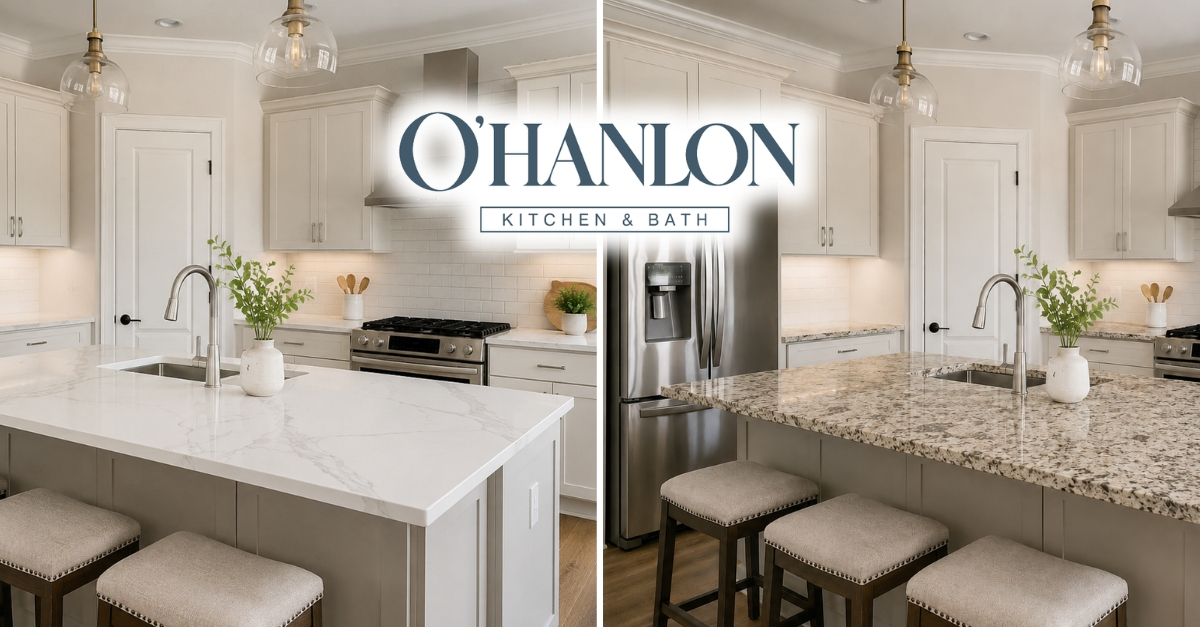
When the countertop and backsplash are made from the same stone, the material becomes a continuous design element. This works especially well with quartz, granite, marble, quartzite, and other slab materials with distinctive patterns.
That doesn’t mean matching is your only option.
You can also choose a complementary stone that works with the countertop’s color and pattern. For example, you can pair a simple countertop with a more dramatic backsplash to create a focal point, or combine two materials with similar tones for a subtle layered effect.
Another option is to use a full-stone backsplash selectively. A homeowner may choose the stone behind the range or cooktop while incorporating another backsplash material elsewhere in the kitchen.
The right choice depends on how much contrast or continuity you want in your kitchen design.
Where Can You Use a Full-Stone Backsplash?
You can incorporate full-stone backsplashes into many kitchen layouts.
Behind the Range or Cooktop
This is one of the most dramatic applications. The areas behind a range naturally draw attention, making it an ideal location for a beautiful slab of stone. A full-stone backsplash can create a strong focal point, especially when paired with a statement range hood or carefully selected lighting.
Along the Main Countertop
Extending the countertop material along the primary backsplash area creates a cohesive look throughout the entire kitchen. This approach can be especially effective in kitchens with simple cabinetry.
Behind the Sink
The wall behind the sink is another area where a full-stone backsplash truly stands out. Using the same material as the countertop creates a clean transition and avoids introducing another pattern or color.
Across an Entire Wall
For a kitchen with open shelving, fewer upper cabinets, or a large uninterrupted wall, full-height stone can make a particularly strong statement. Rather than leaving the wall as a secondary element, the stone becomes an intentional part of the overall kitchen design.
Which Stone Materials Work Best for a Full-Height Backsplash?
The right material depends on the look you’re trying to achieve, as well as your preferences for durability, maintenance, and budget.
Quartz
Quartz is a popular choice for those who want a consistent, coordinated appearance. Because quartz is manufactured, it comes in a wide range of patterns and colors, including options designed to mimic natural stone. Using the same quartz for the countertop and backsplash can create an especially cohesive appearance.
Granite
Granite offers the natural variation that makes each slab unique. Its range of colors, patterns, and movement can work beautifully as both a countertop and full-stone backsplash. For homeowners who want a one-of-a-kind natural material, granite can add plenty of visual interest.
Marble
Marble is a classic choice for a truly elegant kitchen. Its distinctive veining can be particularly striking when the slab extends from the countertop onto the wall. But before choosing marble, consider the care and maintenance it requires.
Quartzite and Other Natural Stones
Quartzite and other natural stone options can offer beautiful movement, unique patterns, and a natural appearance. Each material has its own characteristics, so consider more than color. Durability, maintenance, availability, slab size, and how the pattern will look when installed should all factor into the decision.
What Are the Benefits Beyond Appearance?
The appeal of a full-stone backsplash isn’t purely aesthetic.
One practical benefit is fewer grout lines. Traditional tile backsplashes can contain numerous grout joints, which may require additional cleaning and maintenance over time. A large slab creates a much more continuous surface, making everyday wipe-downs simpler.
A full-stone backsplash can also reduce visual clutter. This allows other features such as cabinetry, hardware, lighting, or the stone itself to stand out.
For smaller kitchens, that visual simplicity can also help the space feel more streamlined.
Create a Kitchen That Feels Designed From Every Angle
The backsplash may be one part of your kitchen remodel, but it can strongly influence how the entire space comes together.
A full-stone backsplash lets you turn a beautiful countertop material into a larger design feature. Whether you want a seamless slab that extends from your countertops to your cabinets or a dramatic stone focal point behind your range, thoughtful material selection can help create a kitchen that feels uniquely yours.
At O’Hanlon Kitchen & Bath, we can help you explore countertop, backsplash, cabinetry, and other design options to create a kitchen that balances elegance and functionality. If you’re planning a kitchen remodel, contact O’Hanlon Kitchen & Bath to start exploring what’s possible for your space.